
A global archive of independent reviews of everything happening from the beginning of the millennium


Read our Copyright Notice click here
For publication dates click here

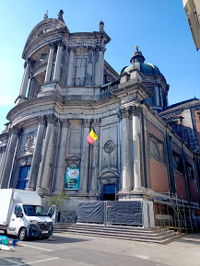
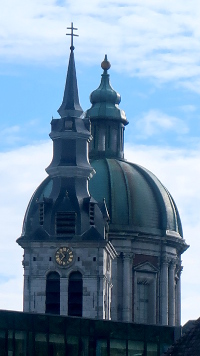 Cathedral Saint Aubain from the banks of the
Sambre
Cathedral Saint Aubain from the banks of the
Sambre
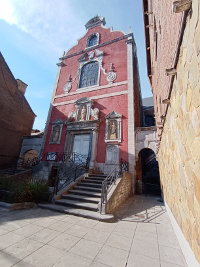 Saint Joseph de Namur Church
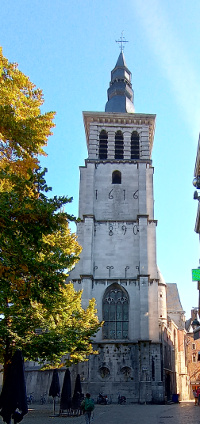 Saint Jean Baptiste de Namur Church
EUROPEAN CAPITAL OF CULTURE?
Reviewed by ANDRE BEAUMONT
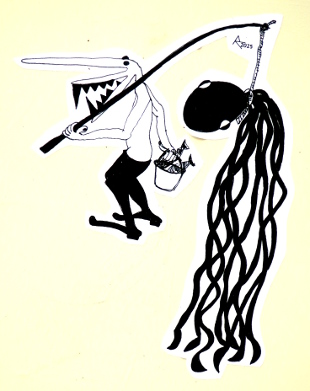
I saw the street artist paste this up and asked him if it was alright to photograph it. He jolyly assented and went off quickly so within 30 seconds of it going up I had photographed it. I had arrived in time.
Within half a day of arriving in Namur I saw that it was a candidate European Capital of Culture for 2030.
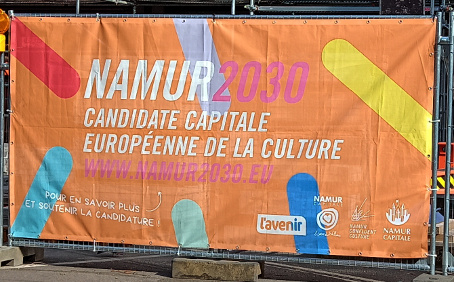
So I thought maybe I can give this candidature a little push. It was my first visit. Unfortunately, and I did not realize till I had left, I was too late. Belgium's candidate had been decided six days before as being Leuven.
Namur is clearly a capital - of Wallonia - but the only thing I can think Leuven as being a capital of is beer. That would be not too bad either as every bottle of beer could carry a capital of culture logo with it around the world. As a cultural brand Leuven is already pretty well known. Namur is more subtlely enchanting.
Belgium became a federal state in 1993 and the first MPs to the Walloon Parliament were elected in 1995 but before that the Walloon Regional Council held a parliament in the old Bourse from 1981-1988.
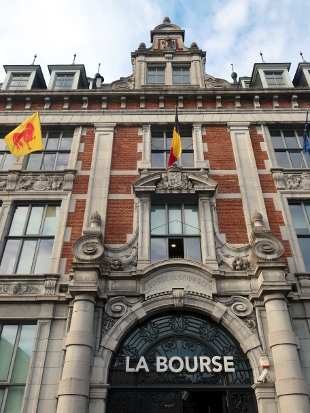

The Walloon Parliament, with the Citadel towering over the Meuse, on a foggy morning
To give a flavour of the culture, which is so varied, I have grouped it as animals, buildings, churches, confluence of the rivers and street art.
The fisher-crocodile street art was located adjacent to the Bourse in front of which is a rather moving sculpture.


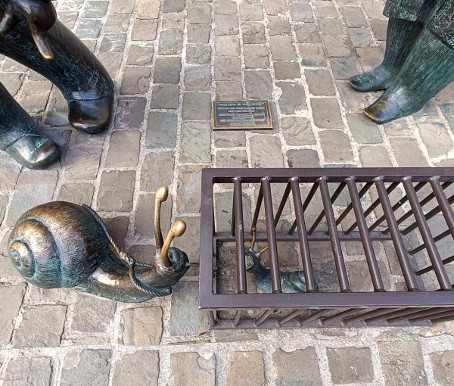
The characters are well known to Namur residents but the sculptress, Suzanne Godard, is surely saying something here about the snails. They are notably social animals. They have been a culinary speciality hereabouts.
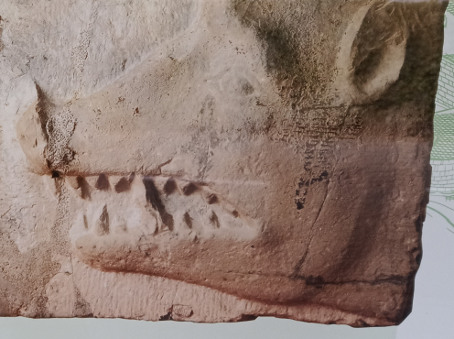
1754 carving of pig's head, pediment of the former Grognon Gate
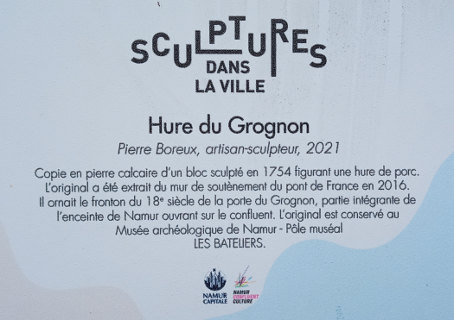
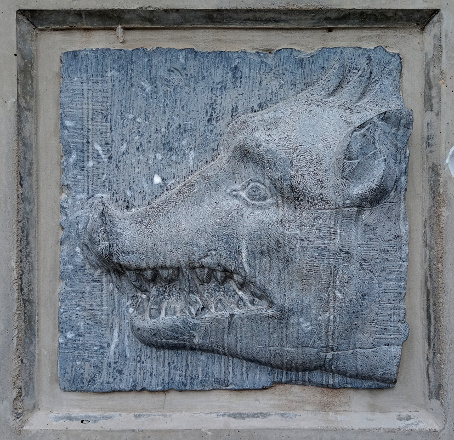
Sculpture near Le Nid at the confluence
In my view Britain and Belgium have the best constructed and most appealing domestic houses, in the temperate mid-zone part of western Europe, in the period 1680 - 1970. In Britain it is the elegance of Georgian terraces and sheer understanding of how to solidly build in the late Victorian and Edwardian periods that stand out.
That understanding slackens in the thirties onwards but many more people get houses.
In both countries there is a profusion of individual houses, particularly terrace houses, all very solidly built in masonry materials that resist the natural entropy of timber frame buildings.

In Belgium, there is the treat that all the houses in a terrace may be of a different design to one another, though built at the same time, as here in middle-class terraces in Namur, which would be mis-labelled as mansions in London.
When you rebuild, you still commission in an individual style.
It is the sheer variety of individual houses, and in Belgium of artistic variety and panache as well (do not be fooled otherwise by the sombreness of the grey stone), that appeals in both countries. Flats are another matter - they are the curate's egg - but unlike many a European country they need not be the urban default.
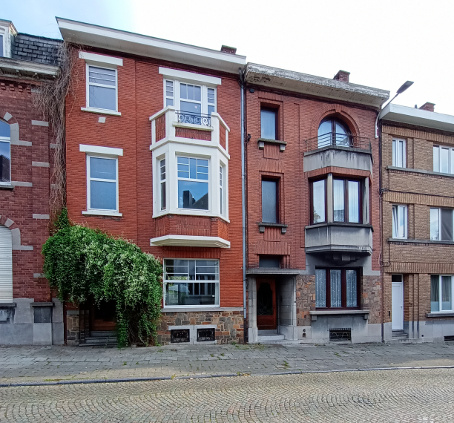
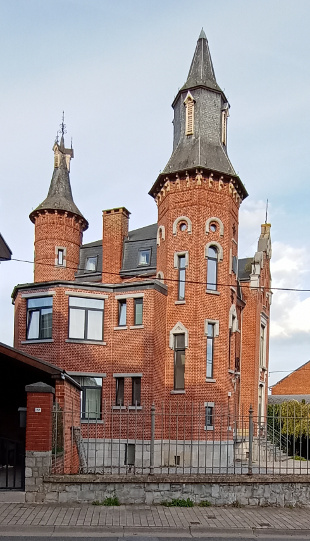
Though probably repurposed, individual houses can be extraordinary
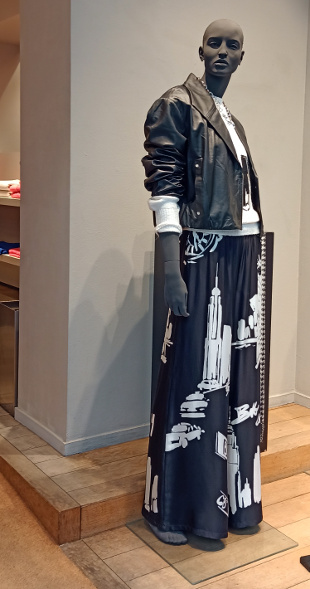
This review will have to be an essay in pictures, but the fashion struggles to keep up

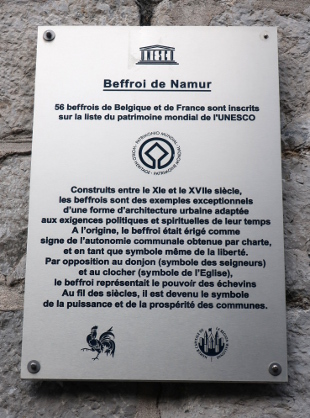
The Belfry does not, being a UNESCO heritage site
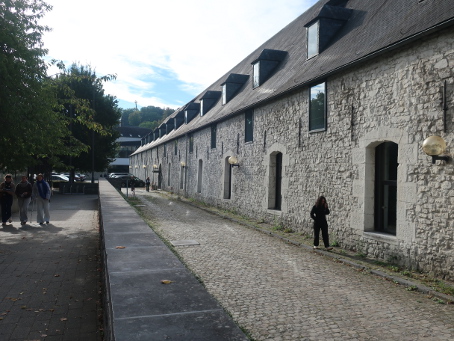
The Arsenal, used by Louis XIV, bordering the Sambre, now university dining and conference facilities
Before arrival the churches seem the obvious cultural draw, and their promise of splendour once their outlines have been spied bears this out, but like many churches in Belgium they are found to be closed, or open very restricted times, despite what is advertised. Nevertheless the restoration of Belgian churches and their treasures is taken seriously and the results are appealing.
Worthwhile, though not over the top, funds are assigned to the task.
It was clear that if the city were to win for 2030 it would have to fix the churches undergoing works in time. They would be natural magnets.
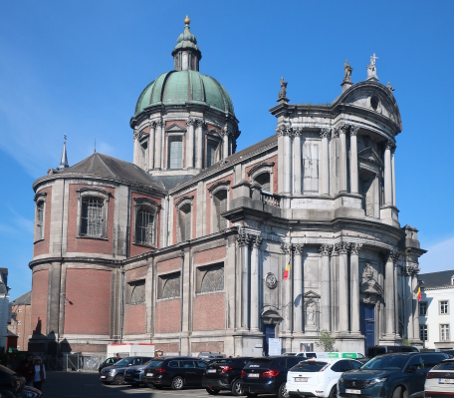
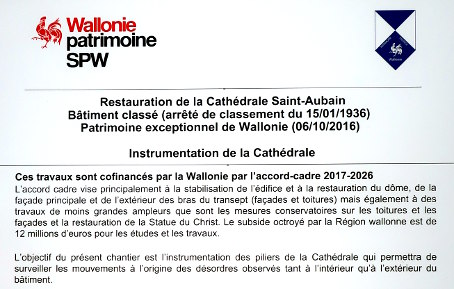
The Cathedral Saint Aubain
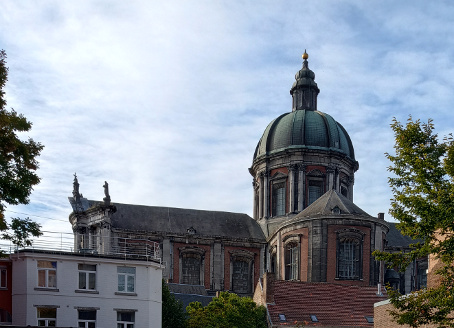
The Cathedral Saint Aubain towering over the University of Namur
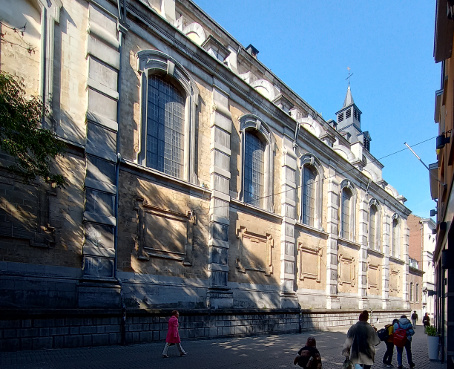
Saint Loup Church, one of the finest Baroque churches in Belgium

The characteristic external column rustication bands continue inside


It is a towering structure in the narrow streets, speaking of the Baroque era and how important religion was to the society
The confluence of the Sambre and Meuse is a very important place for Namur. The citadel sits between the two rivers and dominates them from the high ground.
My first preparation to visit the city was to look at a topographical map as the city had been subject to unpredicted floods in 2021. Not the flat lands of Flanders here.
In Napoleonic times, one of Bonaparte's marshals, Bernadotte, a Gascon with excellent skills, commanded the army of the Sambre and Meuse. He later became king of Sweden and Norway not by conquest but by invitation.

The point of confluence from the Sambre bank
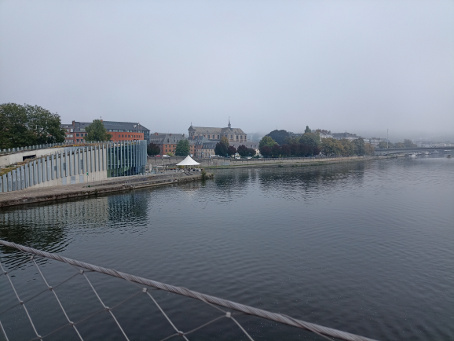
The point of confluence from the new pedestrian bridge across the Meuse
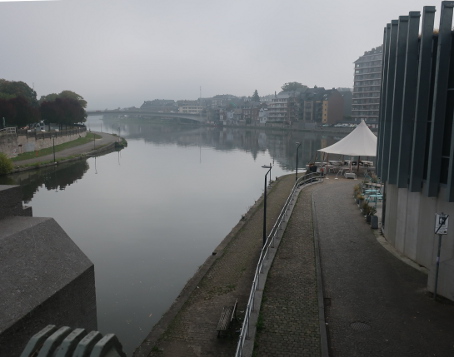
The point of confluence crossing the Sambre
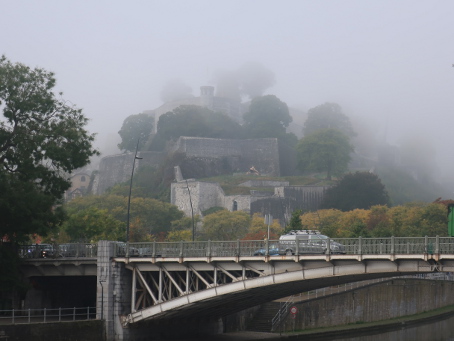
The bridge across the Sambre with the citadel behind

A 2021 sculpture made of house keys
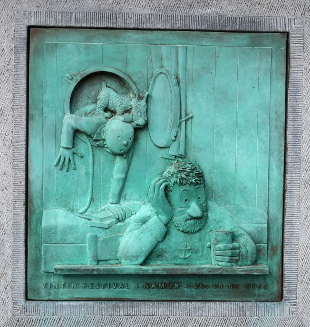
A Tintin bronze on the Bourse
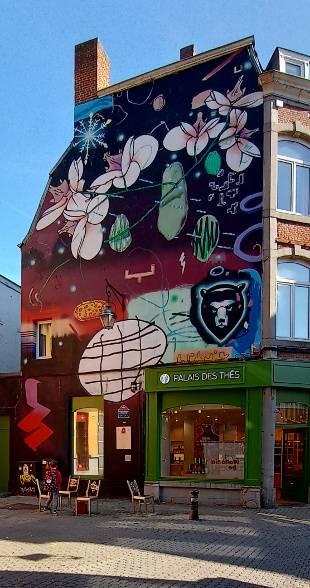
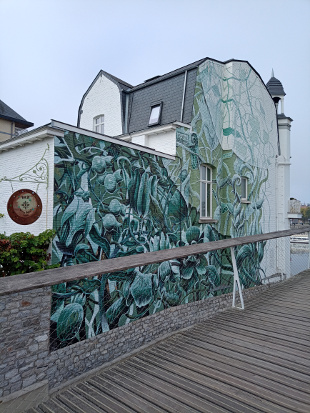
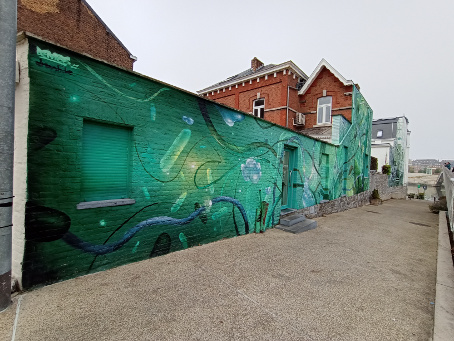
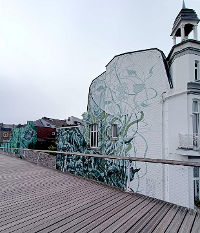
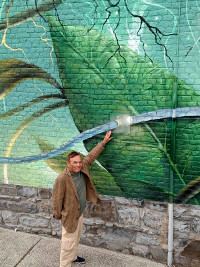
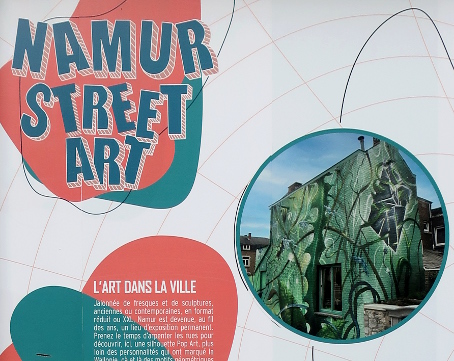
A good feature is that Belgium is strong on street art that has been given the nod. It is the new Art Nouveau and Art Deco, the draw for those who do not wish to be staid.