

A global archive of independent reviews of everything happening from the beginning of the millennium


Read our Copyright Notice click here
For publication dates click here
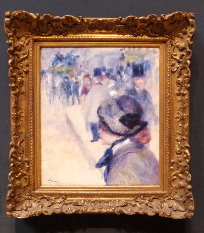 La Place Clichy, c. 1880, Fitzwilliam Museum
This earlier painting used to hang in the collection of Rab and Lady Mollie Butler (a Courtauld) in the Master's Lodge at Trinity College, Cambridge, where it could not have been better lit or had a better setting (dispelling the idea that great art is always best in a gallery) and which kicked off my interest in the paintings of Renoir. Maybe around a thousand must have seen it there over the years.
In childhood we had a family friend who had his own Titian - which I thought cool - so I do not walk past Old Masters not bothering to understand.
It may not matter - every age sets what it values and there is plenty of art to go round - except at times governmental organisation of society may kill creativity with its dull patina and so we go back to what may serve as a point of reference.
If the points of reference we choose are wildly different from contemporary art (in our case, 2020s art is contemporary not 2010s art - that is already established and perhaps in the last decade of an older order) that does not detract from the latter.
AI may kill creativity with its soulless patina.
Soul is not something Renoir lacked. The museum is a very human place.
Renoir lived through the anxious period of the first war here and died in 1919. His wife, Aline, predeceased him.
The sculpture, drawing on antiquity, is a million miles from, say, contemporary Futurist sculpture from Italy.
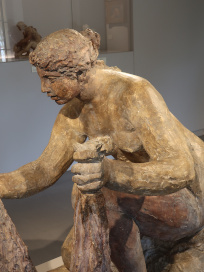 Pierre-Auguste Renoir and Richard Guino, Grande
Laveuse, 1917
Pierre-Auguste Renoir and Richard Guino, Grande
Laveuse, 1917
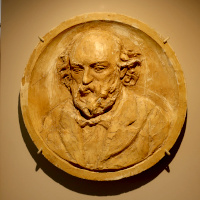 Pierre-Auguste Renoir and Richard Guino,
Cézanne, 1915
Pierre-Auguste Renoir and Richard Guino,
Cézanne, 1915
RENOIR MUSEUM
Reviewed by ANDRE BEAUMONT
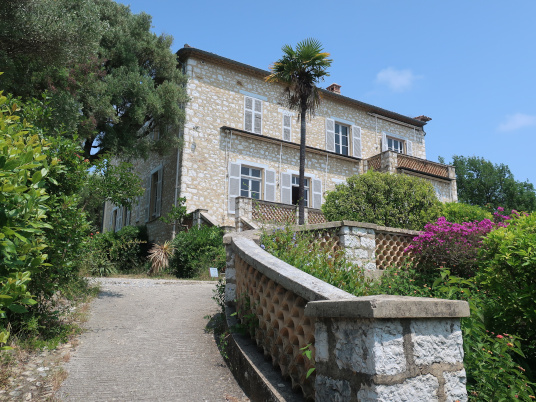
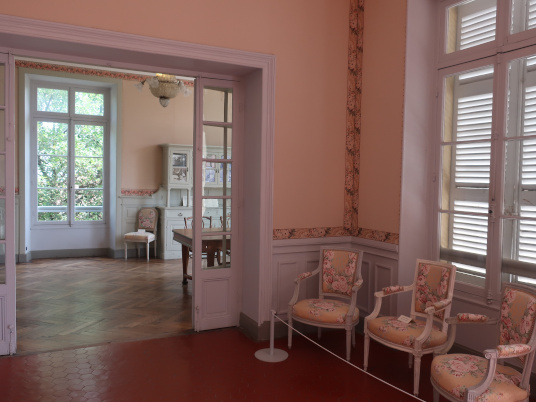
The Renoir Museum is found in his last home in Cagnes-sur-Mer, near Nice, and designed for him by an architect in neo-Provençal style on farmland he acquired around 1906 to whose centennial olive trees he was attracted. The parkland can make it a pleasant day out for visitors.
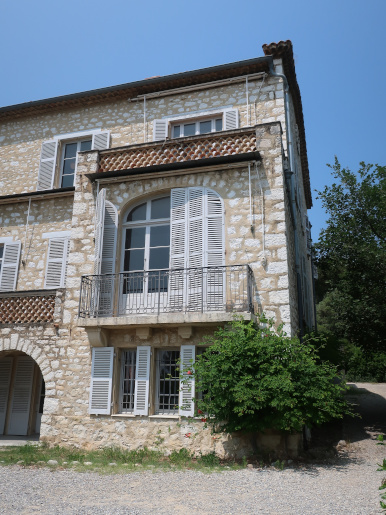
The south elevation shows the dropped floor level of the studio within - where he painted with some difficulty and often with assistance as he had rheumatoid arthritis.
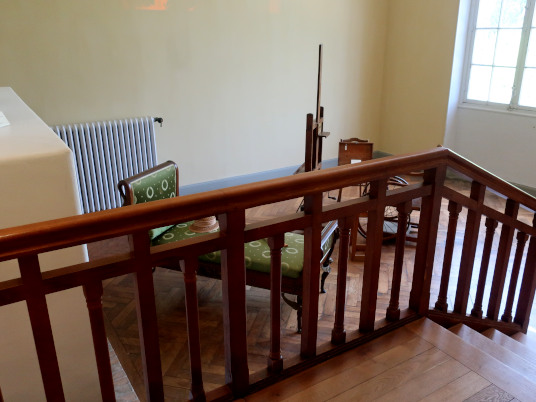
The first floor has related painting seeking to give context to his life here and the basement floor contains sculptures produced in collaboration with Richard Guino but this review focusses mainly on showing the paintings attributed as in his own hand, at the museum in 2025.
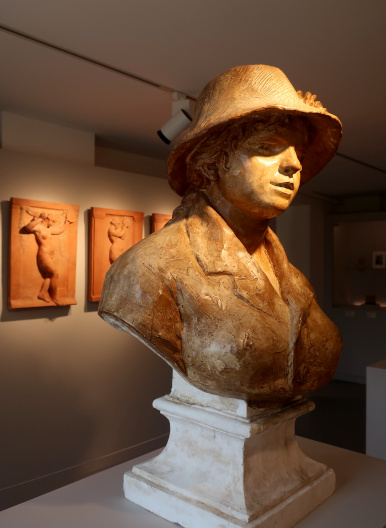
Pierre-Auguste Renoir and Richard Guino, Madame Aline Renoir, 1916
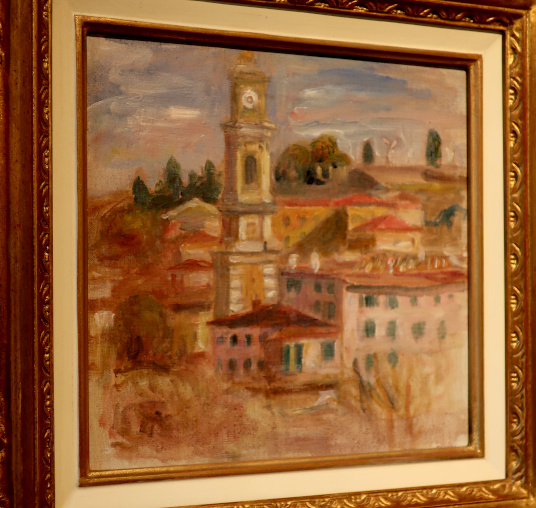
Roofs of Nice Old Town from a window in Nice, 1918
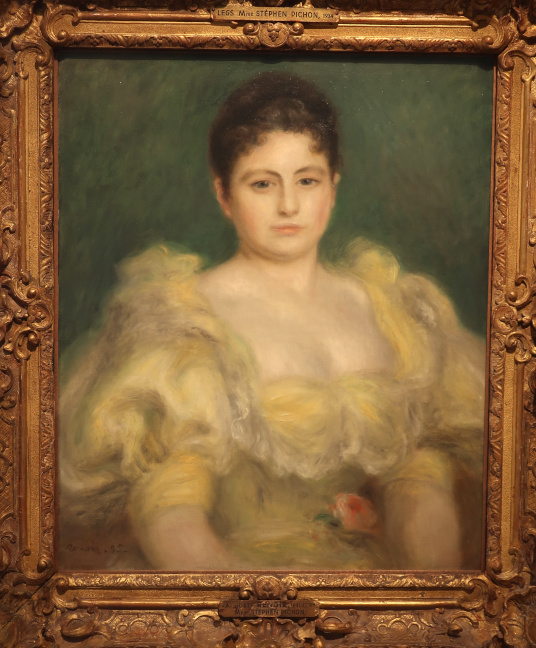
Portrait of Madame Pichon, 1885, loan from Musée d'Orsay
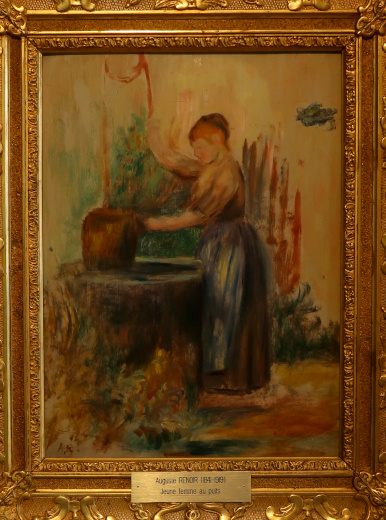
Young Woman at the Well, oil on wood, 1886, loan from Musée d'Orsay
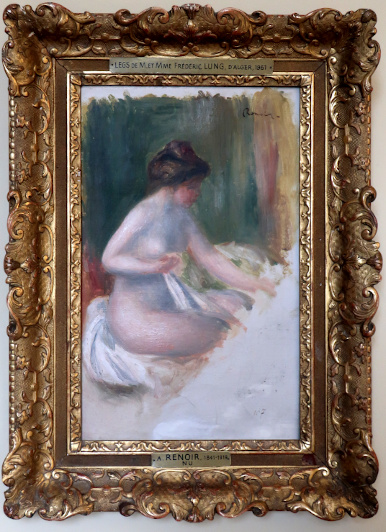
Seated Nude, 1895, loan from Musée d'Orsay
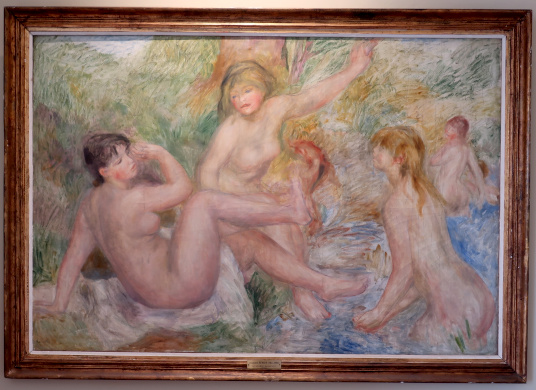
Les Grandes Baigneuses, 1903 - 1908, loan from Musée d'Orsay
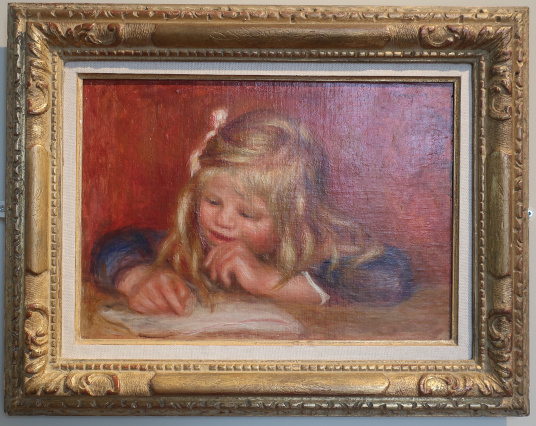
Coco Reading 1905, loan from Musée d'Orsay
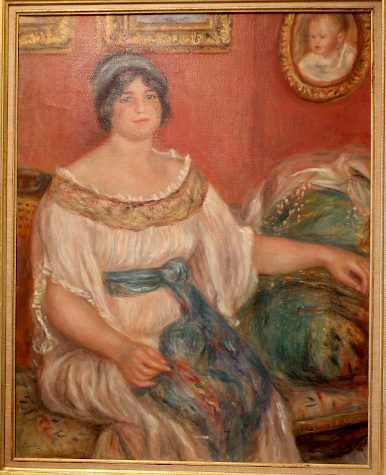
Portrait of Madame Colonna Romano, 1910, loan from Musée d'Orsay
The Impressionism has declined from Place Clichy, which invites the brain to fill in so much, to Madame Romano, which has distinctly classical references and by which time he would have been resident in the house here.
Then you come to paintings done in the locality or possibly so.
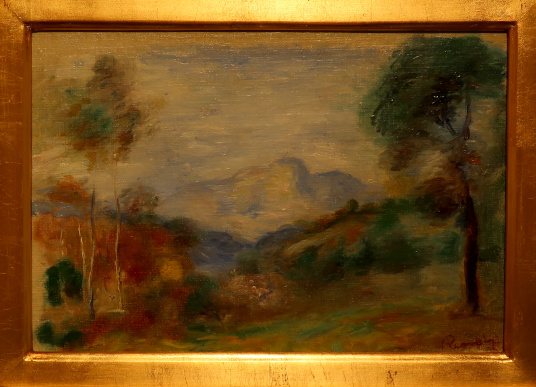
The Cagne Valley and Saint-Jeannet, 1905
Having seen the valley no later than 1905 he bought the Collettes farm in 1906, which you can see from the house a hundred metres away, and which is in the 4 hectacres of the park. Aline Renoir, however, wanted to live in a house so it was built in 1909.
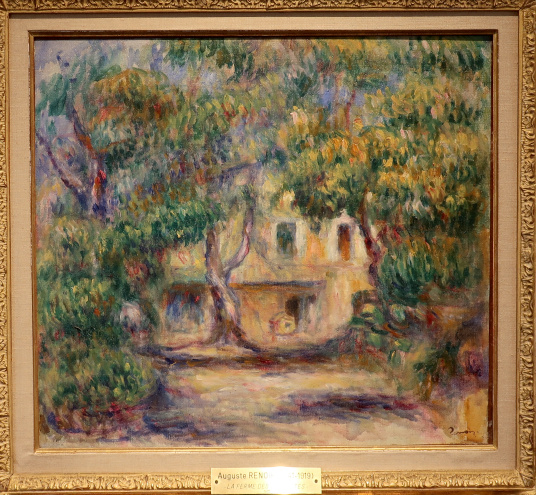
The Collettes Farm, 1910
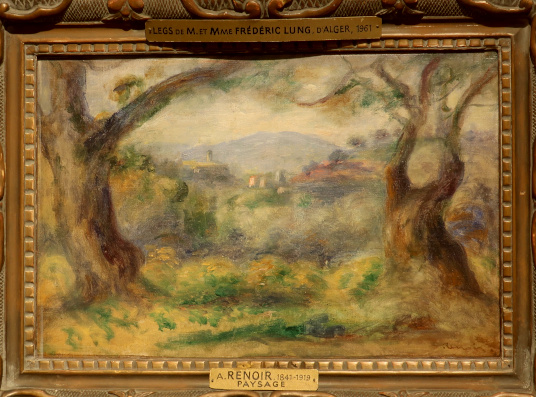
The Collettes countryside, c.1910, loan from Musée d'Orsay
Though one of the last two is given as being from the period he was living here I would have doubt as to them having been painted here. You do not get such woods or fruit hereabouts.
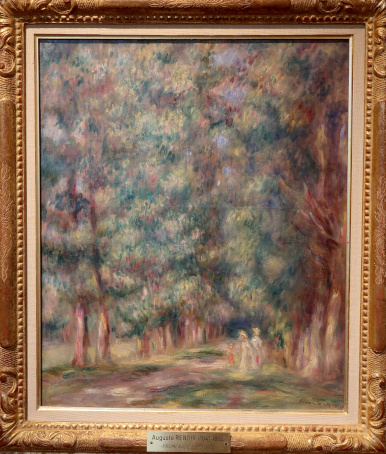
Walk in the woods, around 1910, loan from Musée d'Orsay
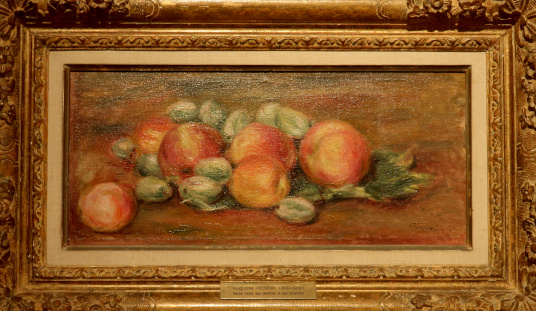
Still Life of Apples and Almonds, undated, loan from Musée d'Orsay